Qeshm Island strikes keep oil war premium alive
Qeshm Island strikes on Friday, the first U.S. action against Iran since the midterms, cut against hopes of a quick end to the war after crude fell more than 16% in five sessions.
Oil traders who priced in peace after the midterms got a reminder that the war has not ended. Qeshm Island strikes on Friday, November 6, which President Donald Trump described as "minor," were the first U.S. military action against Iran since Tuesday's elections and came as Gulf tensions showed little sign of easing.
What happened
Iranian state media reported two explosions in the Suza area of Qeshm, an island in the Strait of Hormuz, and the Tasnim agency said two missiles hit, according to Reuters. Speaking to reporters in West Palm Beach, Trump declined to discuss the island but said U.S. forces had knocked out "a little bit of an anti-aircraft device" in minutes. He did not explicitly confirm the two were the same event. U.S. forces struck the same island on Monday in what an official called a defensive measure.
Escalation continued into the weekend. CNBC reported that U.S. Central Command disabled a St. Kitts-flagged tanker late Saturday after it ignored warnings and tried to leave the region following a call at an Iranian port, while Iranian media reported blasts in the port of Jask. A third U.S. carrier strike group is heading to the region.
Diplomacy is running in parallel. Trump discussed de-escalation with Qatar's emir, and an Iranian official told Reuters that Tehran had sent a nuclear proposal to Washington through Qatar.
Why it matters
Crude fell more than 16% over the previous five trading days on hopes that the Democratic sweep would force an end to the conflict, as covered in our report on the WTI plunge after the midterms. Brent traded above $97 on Friday and U.S. crude near $90. The Qeshm Island strikes test that optimism: Rapidan Energy sees an 80% chance fighting resumes, and its president, Bob McNally, told CNBC prices would climb back above $100 if it does.
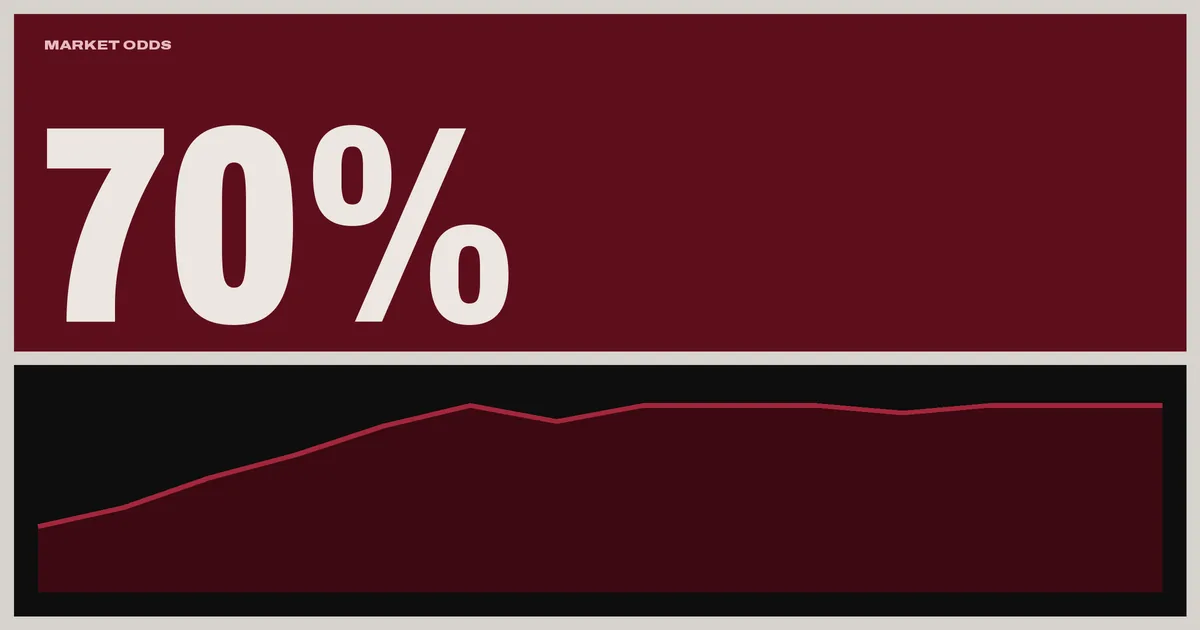
Prediction markets are calmer. Polymarket priced the No side of its contract on WTI reaching $105 in November at 70% at 08:27 MSK on Nov. 8, with $100 priced at 49% and a dip to $85 at 66%. Earlier Qatar-Iran talks had also weighed on prices.
What's next
Monday's open will show whether Friday's Qeshm Island strikes and the weekend tanker incident restore a risk premium. Congress cannot pass a war powers resolution before Democrats take their seats in January, and government funding expires on December 11.
Contract rules and live odds are on Polymarket.
The call
We say the active-month ICE WTI crude futures contract will not trade at or above $105 a barrel at any point in November 2026. Polymarket priced that No side at 70% at 08:27 MSK on Nov. 8. U.S. crude sits roughly $14 below the line, and despite fresh strikes, majority pricing treats a return to $105 this month as the less likely path.
This article is for information only and is not investment advice. Calls are editorial forecasts, logged with market odds at the time of publication and kept on the record.