Election Day midterm odds: Democrats lead House and Senate
Election Day midterm odds on Polymarket and Kalshi still favor Democrats to take both chambers, with House control near 94–95% and Senate control near 74–76% as Americans vote on November 3.
Prediction markets are closing the book on Congress with little ambiguity left on the House and a clearer, if softer, lean on the Senate. Election Day midterm odds across Polymarket and Kalshi still point to Democratic gains as polls open on November 3.
What happened
Kalshi's final look, timed at noon ET on November 2, priced Democrats at 74% to win the Senate and 94% to win the House, with Republicans at 26% and 6%. Polymarket's gamma snapshot into Tuesday morning showed Democratic House control near 94.5% Yes and Democratic Senate control near 76.5% Yes.
The combined outcome is priced in the same neighborhood. Polymarket's Balance of Power contract for a Democratic Senate and Democratic House sat near 76.5% Yes, with roughly $2.8 million of liquidity and about $15 million of volume, and an end time of 2026-11-04T04:59Z.
Chamber math still matters. Kalshi noted Republicans hold 53 Senate seats to 47 for Democrats and independents who caucus with them; Democrats need a net gain of four for control, while a three-seat gain would leave a 50-50 chamber with Vice President JD Vance breaking ties.
Why it matters
National prices hide state-level risk. Thin races can still move the Senate map even when the headline chamber market looks settled, a pattern our midterm prediction market odds review flagged when Maine was the focal swing.
Local money is also large enough to matter for enforcement fights. Our report on Maryland election betting showed more than $1.1 million already tied to one state's races despite a state ban, a reminder that election contracts are no longer niche.
Settlement rules differ by venue. Kalshi can settle Senate control early if at least four of eight designated outlets agree without conflicting calls; otherwise it looks to the party of the Senate president pro tempore on February 1, 2027. Polymarket's chamber markets also allow for runoffs and caucus decisions that can stretch past election night. That settlement lag is why traders treat Tuesday's first media calls as a path, not a final print, on the Senate side.
Election Day midterm odds therefore function less as a horse-race novelty and more as a live pricing layer for rates, equities and sector hedges that reprice with every media call.
What's next
Watch House speaker maths first, then the handful of Senate seats that decide whether Democrats clear four net gains. Kalshi's final midterm odds lays out the chamber prices and the competitive races still on the board.
If those chamber prices hold through Tuesday night, markets will treat Democratic House control as nearly priced in and focus residual risk on the Senate margin and any delayed certifications.
Volume on the Balance of Power complex already ranks among Polymarket's largest political books of the cycle.
The call
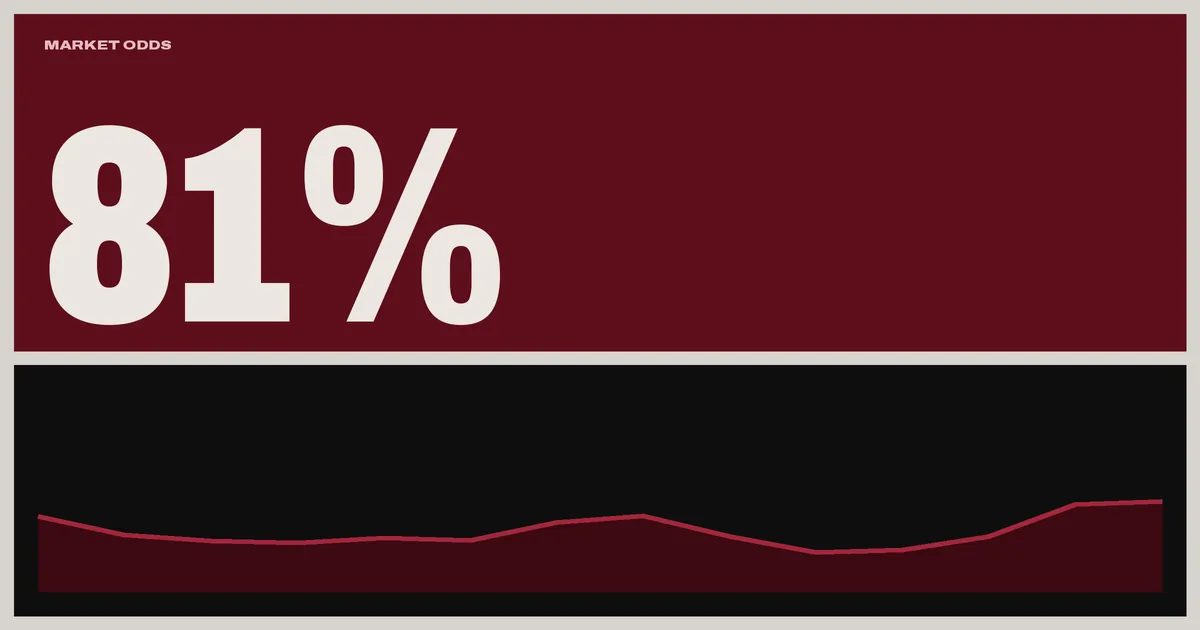
We say Democrats will win the Michigan Senate race in the 2026 midterms. Polymarket's "Will the Democrats win the Michigan Senate race in 2026?" market priced Yes at 81% at 08:31 MSK on Nov. 3, with solid liquidity in a liquid statewide book. The vote is November 3; the market's listed end is 2026-11-04, though certification and media calls can lag election night. Michigan is one of the Senate seats that can still change the national map even when Election Day midterm odds already favor Democrats on the chamber contracts.
This article is for information only and is not investment advice. Calls are editorial forecasts, logged with market odds at the time of publication and kept on the record.