Houthi attacks on Saudi oil split WTI and Brent
Yemen's Houthis claimed strikes on Aramco's Yanbu site and the Shaybah field, sending WTI to its highest settlement since mid-September even as Brent slipped on profit-taking.
Houthi attacks on Saudi oil infrastructure pulled the two crude benchmarks in opposite directions on Monday, Oct. 19. U.S. West Texas Intermediate rose 2.2% to $103.66 a barrel, its best settlement since Sept. 15, while Brent finished 0.3% lower at $109.55 as traders locked in gains from last week's climb to a five-month high.
What happened
The Iran-aligned group said it had hit an Aramco facility in Yanbu on the Red Sea coast, the Shaybah field and two airports, King Khalid International in Riyadh and Abha. Riyadh did not confirm the strikes right away, and Reuters was unable to verify the claims on its own.
Brent had dropped by more than $3 during the session before recovering most of the loss. WTI's jump came with a caveat: the November contract expires on Oct. 20, and only about 26,000 lots changed hands in it, compared with more than 195,000 in December, which settled 0.5% lower at $98.54.
The wider region stayed tense. Iranian media, citing the Revolutionary Guards, said a tanker caught fire and exploded after striking a mine on Sunday in the southern part of the Hormuz waterway. In Yemen, a Houthi strike on a government training camp in Shabwa province killed 53 people and injured 200, officials said. Prices held their ground early Tuesday, with Brent up 0.14% at $109.70 and WTI 0.25% higher at $103.92, CNBC reported.
Why it matters
Physical supply, not headlines, remains the main driver. Kpler, an analytics firm, put average Gulf crude flows at roughly 8.5 million barrels a day across last week, compared with over 20 million in the prior week, after at least 10 confirmed incidents involving commercial ships. Houthi attacks on Saudi oil add a second front to that Hormuz squeeze, which we tracked when Brent hit $110.
Offsetting forces are limiting the rally. President Donald Trump's Friday order easing some Russia-related energy sanctions, covered in our sanctions waiver report, raised the prospect of more Russian barrels, although analysts doubt how quickly they will arrive. SEB's Bjarne Schieldrop warned that any pickup in Hormuz exports could fade if Iran escalates before the Nov. 3 U.S. midterms.
The security toll is mounting inside the kingdom. A Houthi strike on the Riyadh airport on Oct. 10 left at least 12 dead and more than 300 injured, CNBC reported, and Saudi forces said they destroyed several drones aimed at the capital region on Friday and Saturday.
What's next
Egypt has said it is ready to support Saudi Arabia, but its parliament pushed back to Oct. 26 a vote that would let its armed forces help if asked. Traders will watch whether Saudi officials confirm damage at Yanbu or Shaybah and whether the December WTI contract, now the active one, follows the expiring month higher.
Prediction markets see no quick end to the fighting. On Polymarket, a Saudi-Houthi ceasefire agreement by Oct. 31 was priced at 4% and one by Dec. 31 at 31% as of 08:29 MSK on Oct. 20. Until a dated truce emerges, Houthi attacks on Saudi oil are likely to keep a risk premium in both benchmarks.
The call
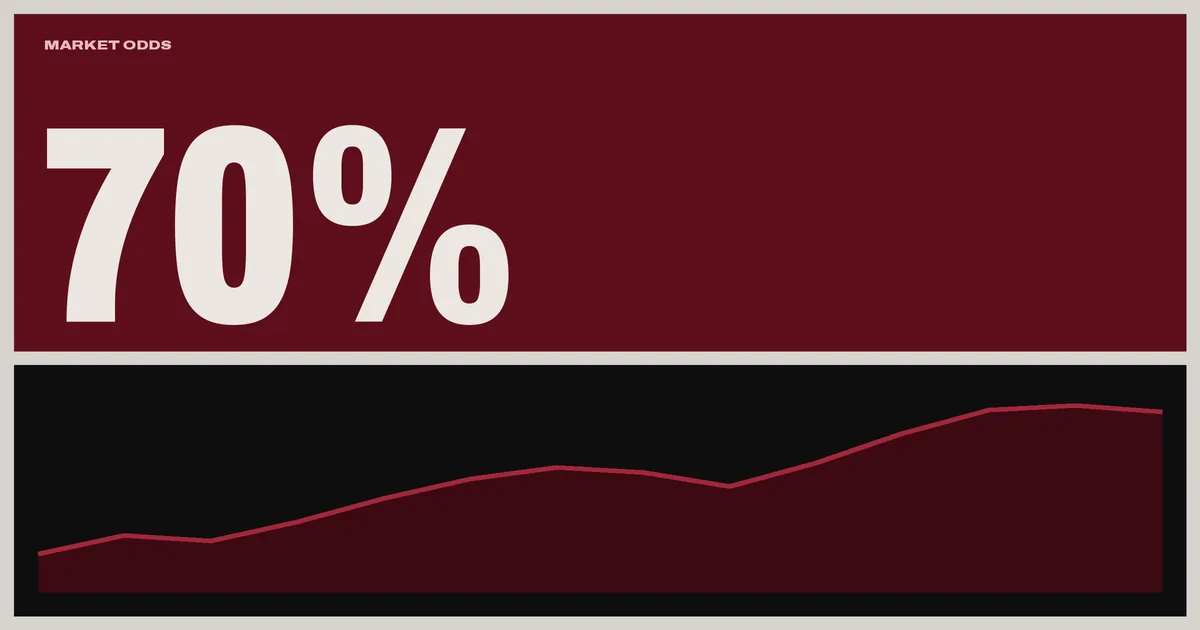
We call that Saudi Arabia and the Houthis will not announce a ceasefire agreement by Dec. 31, 2026. Polymarket puts that outcome at 70%, and with strikes widening to oil and airport targets, a dated, mutual halt to fighting looks unlikely before year-end.
This article is for information only and is not investment advice. Calls are editorial forecasts, logged with market odds at the time of publication and kept on the record.