Goldman Kospi target slashed to 9,000 as Korea's selloff deepens
Goldman Sachs cut its 12-month call for South Korea's benchmark by a quarter, yet says the index trading near four times earnings still has more than 60% upside.
The Goldman Kospi target is now 9,000, down from 12,000. Strategists led by Timothy Moe cut their 12-month forecast for South Korea's main index by 25% in a report on Sunday, Oct. 25, four months after setting the higher number, CNBC and Seoul Economic Daily reported.
What happened
Goldman kept its overweight rating. The new level still implies more than 60% upside from about 5,550, because the index has fallen so far, the bank said. Seoul Economic Daily, citing Bloomberg, said the Kospi had dropped more than 35% from its June peak, and Goldman applied more conservative valuation assumptions after that slide.
The cut did not help on Monday. The Kospi opened 0.92% lower at 5,499.05, Newsis reported, and investingLive said it was down 1.6% in early trade with the tech-heavy Kosdaq off 2.8%. On Oct. 15 the market fell 7.57% in a single session, triggering circuit breakers. Over the past month the index has lost 18.8%, erasing about 1,100 trillion won from the market value of the 10 largest business groups, Newsis reported, and Bloomberg said this year's hottest major market had turned into the world's cheapest.
Why it matters
Goldman's case rests on valuation. The Kospi trades at about four times forward earnings, roughly three standard deviations below its historical average, CNBC reported, and Bloomberg called that the lowest multiple among 18 major markets since 2006. Memory chip stocks are priced for an earnings fall of about 65% in 2027, which Goldman considers too pessimistic. Stocks outside memory, roughly half the index, trade at 7.6 times forward earnings and look more than 30% undervalued, the bank said.
Sentiment is the problem. Goldman blamed the rout on doubts about the durability of AI spending, rising oil prices and hawkish central banks, and said hedge funds keep selling Korean and Taiwanese equities, with about $1 billion of foreign outflows from Korea. We tracked the start of that move in our report on the Asian chip selloff, and Korea has also been a driver of crypto sentiment, as when a Kospi rebound lifted bitcoin earlier this month.
The revised Goldman Kospi target still assumes a big recovery. The bank prefers power and industrial names, companies tied to governance reform, domestic reflation plays and K-culture exporters over a straight bet on memory chips.
What's next
This week's earnings from Microsoft, Alphabet and Amazon will test the AI spending story that Korean chipmakers depend on. A cut to the Goldman Kospi target is a reminder that even bulls are marking down how quickly the index can heal. Goldman's reasoning is laid out in CNBC's report.
The call
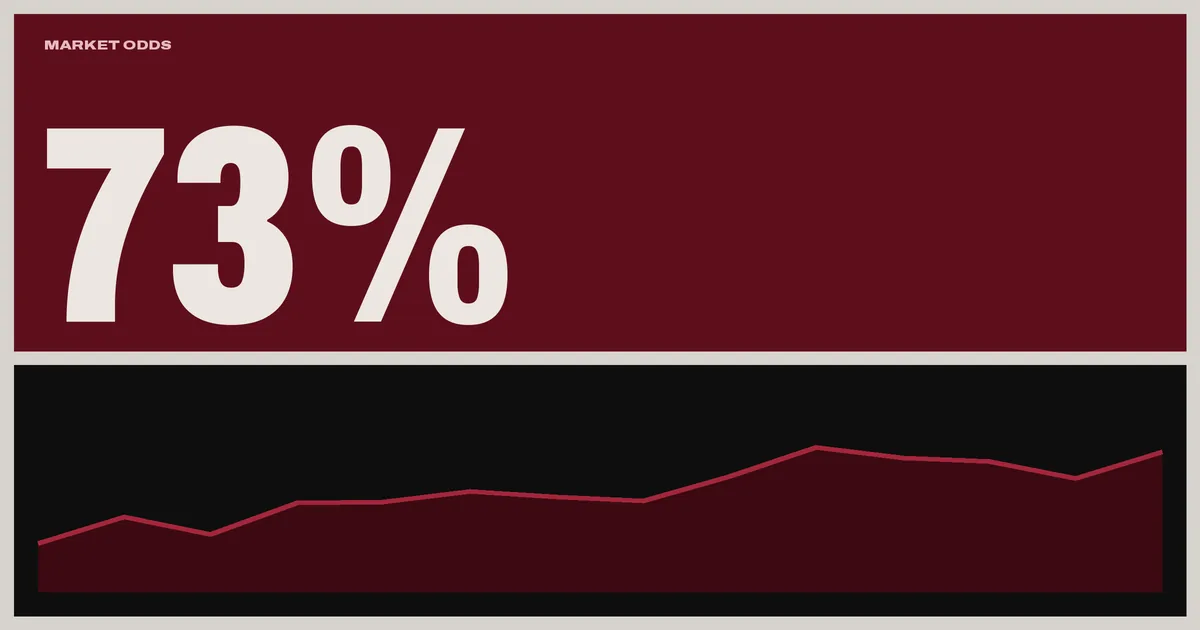
We say the Kospi will not set a new all-time high above its June 19 intraday record of 9,385.59 before the end of 2027. Polymarket's "KOSPI all-time high before 2028?" market priced No at 73% at 08:24 MSK on Oct. 26. Even Goldman's lowered target sits below that record, and the index would need to climb about 70% from here.
This article is for information only and is not investment advice. Calls are editorial forecasts, logged with market odds at the time of publication and kept on the record.