Oil price shock returns: what Brent at $116 means for markets
Brent closed at its highest since April after Houthi attacks on Saudi Arabia and talk of renewed U.S. strikes on Iran. Here is what is driving the move, who pays, and what to watch next.
The oil price shock that markets hoped had peaked in the spring is back. Brent crude settled at $116.72 a barrel on Friday, Oct. 23, its highest close since April 29, after a week of Houthi attacks on Saudi Arabia, an oil spill off the United Arab Emirates and a steady drumbeat of reports that Washington and Israel are preparing a new round of strikes on Iran. This long read sets out what moved prices this week, how far the shock has already travelled through the economy, and what could decide the next leg ahead of the Federal Reserve meeting and the U.S. midterm elections.
What happened this week
Brent rose 3.1% on Friday alone and 6.2% across the week, its third straight weekly gain, according to CNBC. U.S. West Texas Intermediate climbed 3.8% to settle at $103.27, which left the American benchmark back above $100 and up about 2% for the week. During the session, Brent reached $117.45, the highest intraday level in nearly six months, Reuters reported in a story carried by Nikkei Asia. The Guardian noted that the contract briefly passed $117 before easing.
"Fears of supply disruptions drove the advance," said Adam Turnquist, chief cross-asset strategist at LPL Financial, pointing to Houthi attacks on energy infrastructure across Saudi Arabia, Reuters reported. Tanker risk had been building for weeks: shipping sources said on Oct. 9 that the supertanker Gem No. 2 was hit by an unidentified projectile 13 nautical miles west of Al Jazeera in the UAE.
The triggers piled up fast. A drone attack on the Shaybah oil field in Saudi Arabia's Eastern Region on Wednesday left two people dead, and at least two more died when Dammam's King Fahd International Airport was hit, CNBC said, citing Saudi state media. Saudi Aramco told staff at its Dhahran headquarters to evacuate and work remotely, according to Reuters. The U.S. State Department ordered non-essential personnel out of the kingdom.
On Friday, the UAE Ministry of Climate Change and Environment said a tanker had leaked oil off the coast of Umm Al Quwain. It did not give a cause or name the vessel. In Libya, the head of the National Oil Corp. said a pipeline valve linking the Hamada and Tahara fields to the port of Zawiya had been shut, cutting output at both fields, according to Reuters.
Meanwhile, Iran's Islamic Revolutionary Guard Corps said on Wednesday that it had hit four commercial vessels in Hormuz, the Guardian reported. NPR said Iran later claimed seven tankers were hit, a claim President Donald Trump dismissed as an attempt to push up prices. A Washington-based think tank that tracks maritime incidents has counted October as the worst month for attacks on shipping in and around the strait, according to Reuters.
Why traders fear a second round
The bigger driver is not any single attack but the prospect of a wider war. CNBC, citing a New York Times report based on U.S. officials, said Washington and Israel have drawn up plans to strike Iran again once the midterm elections are over. Trump said on Wednesday that Washington was not negotiating with Tehran and that something would happen "fairly soon."
The military picture points the same way. The U.S. is sending a third aircraft carrier, the USS Theodore Roosevelt, to the region, and Defense Secretary Pete Hegseth quietly visited Israel this week, NPR reported. The carrier is not expected to arrive for another week or so, and NPR's national security correspondent judged that action looked much more likely after the Nov. 3 vote than before it, given the White House's interest in lower fuel prices.
Iran has answered with threats aimed squarely at energy. The Wall Street Journal reported that Tehran warned, through intermediaries, that renewed strikes would widen its targets to airports, oil and gas pipelines and telecommunications in neighboring Gulf states, according to a summary by IranWire. The Guardian said Tehran also named undersea cables, data centers and AI facilities. Iran's army chief said the military was ready for "asymmetric warfare," according to the state agency Tasnim, as cited by CNBC.
Traders are no longer pricing one bad week. They are pricing the chance that the war's eighth month turns into its most dangerous one.
Analysts made the same point in plainer terms. "Widespread reports that the US is considering renewed military strikes on Iran after the midterm elections rather than pursuing a diplomatic route was enough for the price to pop," Richard Hunter of Interactive Investor told the Guardian. Andrew Lipow of Lipow Oil Associates told Reuters that more oil has been moving out of Hormuz, but that this "could change at any minute."
How far the shock has already travelled
The conflict has also spread to a second sea lane. Fighting between the Houthis and the Saudi-led coalition that backs Yemen's recognized government has raged since the group pushed toward the Bab el-Mandeb Strait last month, Reuters said. That choke point at the mouth of the Red Sea is now at risk alongside Hormuz.
It helps to remember the starting point. Brent traded around $72 a barrel in February, before the war began, and touched $126 by the end of April, according to the Guardian. Friday's close therefore sits about 62% above the pre-war level, though still below the spring peak. The path has not been smooth: AAA noted earlier this month that U.S. crude had spent several days in the $80s before climbing back above $90.
Consumers have felt it at the pump. The AAA national average for regular gasoline was $4.29 a gallon on Oct. 23, according to the motoring group's daily tracker. Earlier in the month, AAA said 2026 was the first year the national average had stayed above $4 in October, putting pump prices at record highs for the season.
Companies are feeling it in their costs. Procter & Gamble said this week that higher raw material, energy and freight costs will cut about $1.4 billion after tax from its fiscal-year results, assuming Brent at $100, as we reported in the P&G oil cost story. With Brent now well above that assumption, the company's finance chief warned of materially higher pressure in the second half of its fiscal year.
The stock market has sorted winners from losers. The S&P 500 energy sector rose 2.5% on Friday to a record high, Reuters said, and CNBC reported that ExxonMobil, Chevron and ConocoPhillips all traded at all-time highs. At the other end, uranium, nuclear and clean energy exchange-traded funds sank to 52-week lows. The Dow lost 1.23% to 52,215.16 and the S&P 500 fell 0.52% to 7,623.68, according to CNBC, which said consumer staples, utilities and health care stocks also fell.
The inflation and Fed problem
Energy is where the oil price shock meets monetary policy. The University of Michigan's final October survey showed one-year inflation expectations at 4.7% and longer-run expectations at 3.5%, up from 3.4%, CoinDesk reported. Those readings matter to a Fed that already raised rates in September.
For now, traders expect a pause. CME FedWatch data cited by Reuters showed a 92% chance that the Fed leaves rates unchanged at its Oct. 27–28 meeting, but a 78% probability of a hike in December. Polymarket's contract on no change in October traded at 94% as of 08:30 MSK on Oct. 24. The 10-year Treasury yield rose 3.7 basis points to 4.99% on Friday after Thursday's sharp drop, Reuters said.
"There are still all these headwinds in terms of sticky inflation," JoAnne Bianco of BondBloxx Investment Management told Reuters. Gold, often seen as an inflation hedge, has not offered shelter: spot prices fell below $4,000 an ounce on Friday as higher rate expectations and margin calls weighed, according to Reuters.
The pressure is global. Japan's core inflation reached 2.1% in September, its highest this year, partly because of higher import and energy costs, CNBC reported. In Moscow, the Bank of Russia held its key rate at 14% on Friday and lifted its forecast for the price of Russian oil to $72 a barrel for 2026, noting that the Middle East is keeping crude elevated and that inflation risks are rising worldwide.
Crypto has traded as a risk asset rather than a hedge. Bitcoin held just above $81,000 on Friday, CoinDesk reported, under the average entry price of buyers of U.S. spot bitcoin ETFs. Our earlier long read on the stagflation scare in crypto markets traced how oil, inflation data and yields first collided in mid-October. The difference now is that the oil leg has strengthened while the bond market has started to price slower growth.
What governments are doing
Policymakers are leaning against the move, but at the margin. A tanker heading for New York is carrying the first Russian diesel shipped to the U.S. under the new Moscow-Washington export deal, according to ship-tracking data cited by Reuters. Trump announced that deal this month to bring down diesel prices before the elections.
In Europe, Germany's oil stockpiling agency, EBV, has put diesel, heating oil and crude from its strategic reserves out to tender. It is Germany's first release since Group of Seven countries agreed at the start of October to tap reserves, according to Reuters. Trump also said on Friday that Washington could finish the war with Iran fast, while hinting it might instead let the fighting fade out slowly.
Those steps can soften spikes in refined products. They cannot replace barrels lost to attacks on Saudi infrastructure or ease fears about the Strait of Hormuz, which is why futures keep reacting to every military headline. Susannah Streeter of Wealth Club told the Guardian that fears were growing of U.S. and Israeli strikes on Iran's energy infrastructure after the Nov. 3 vote, and that crossing Hormuz was still "a dangerous journey" for ships. She also pointed to Ukrainian strikes on Russian refineries as an extra source of supply worry. Hunter of Interactive Investor added that a war many expected to be short has now dragged into an eighth month.
What's next
The calendar is crowded. The Fed announces its decision on Oct. 28, with the PCE inflation report due on Oct. 29. Israel votes on Tuesday, and the U.S. midterms follow on Nov. 3. About a third of S&P 500 companies report next week, including Alphabet, Microsoft and Amazon, whose capital spending plans will be closely watched, Reuters said.
The key variables for oil are military rather than economic: whether the USS Theodore Roosevelt's arrival marks a turning point, whether Iran acts on its threats against Gulf infrastructure, and whether Houthi strikes on Saudi Arabia escalate further. CNBC's oil market report noted that traders now expect U.S. strikes on Iran to resume in the coming weeks.
The call
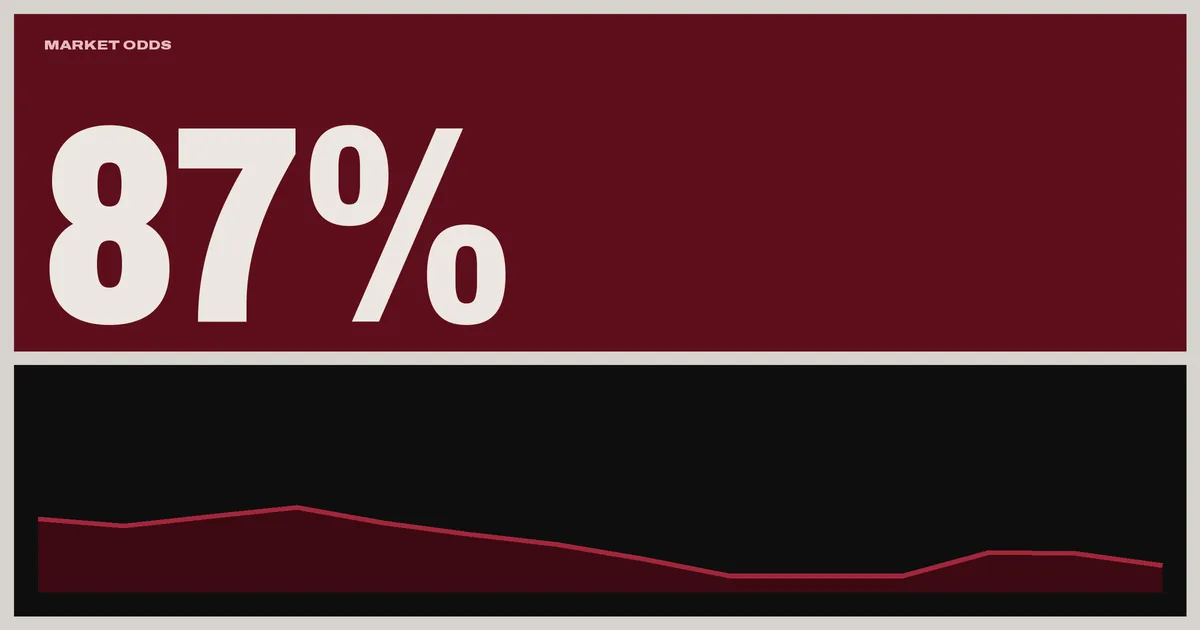
We call that crude oil will NOT set a new all-time high by Dec. 31, 2026, meaning the CME front-month WTI contract will not trade above $147.27. Polymarket puts that outcome at 87%. The oil price shock is real, but WTI would need to rise more than 40% from Friday's close, and reserve releases plus rising flows through Hormuz argue against a record.
This article is for information only and is not investment advice. Calls are editorial forecasts, logged with market odds at the time of publication and kept on the record.