Sharara pipeline restart sends oil to a three-month low as supply recovers
Oil fell more than 3% on Monday to a three-month low after a Sharara pipeline restart in Libya added to recovering Middle East flows, and WTI slipped below $80 in Asian trading on Tuesday despite attacks on Gulf shipping.
Crude extended its slide into a third month of lows. Brent futures settled down $3.20 at $89.37 a barrel on Monday and West Texas Intermediate lost $3.24 to $80.17, Reuters reported, as a Sharara pipeline restart in Libya and rising Middle East exports outweighed fresh attacks on shipping and refineries in the region.
What happened
Libya's National Oil Corporation had said earlier on Monday that an "unlawful group" closed a valve on the line, putting around 350,000 barrels a day of output at risk, Hydrocarbon Processing reported. Pumping resumed after a shutdown of nearly 10 hours, and oil started to fill tanks at the Akakus site in Zawiya. A separate line from the Hamada field to the Zawiya refinery has been shut for more than two weeks.
Brent closed at its lowest since Aug. 31 and WTI at its lowest since Aug. 10, according to Reuters. In Asian hours on Tuesday WTI traded around $79.70, FXStreet said, ahead of the American Petroleum Institute's inventory report later in the day.
Why it matters
The market is now trading supply rather than risk. JPMorgan sees futures easing to the high $70s during the first half of 2027 as a surplus builds, Reuters said, and ING noted that OPEC+ output rose for a second straight month in October to 35.6 million barrels a day, led by Saudi Arabia. "With each passing day it seems less likely that Trump will attack again," IG's Chris Beauchamp said, describing the fading war premium.
That is why the weekend's incidents barely registered. The Houthis claimed another strike on a Saudi refinery, following the Rabigh refinery attack claim we covered on Monday, and the UK Maritime Trade Operations reported attacks on vessels near the Strait of Hormuz. Bank of America cautioned that low inventories still leave the world exposed. The Sharara pipeline restart shows how quickly lost barrels can return, a theme also visible in Polymarket energy markets.
What's next
OPEC+ ministers meet on Nov. 29 to set 2027 output policy, and a preliminary Reuters poll pointed to a rise of about 900,000 barrels in U.S. crude and product stocks for the week to Nov. 20. Trump has said he would lean toward renewed strikes on Iran after the new year if talks fail, which remains the main upside risk.
For November, prediction markets see a deeper dip as possible but not likely. Polymarket priced Yes on a WTI low of $75 this month at 28% at 08:18 MSK on Nov. 24. Another outage like the one before the Sharara pipeline restart could change that quickly. The Reuters report on Monday's move is here.
The call
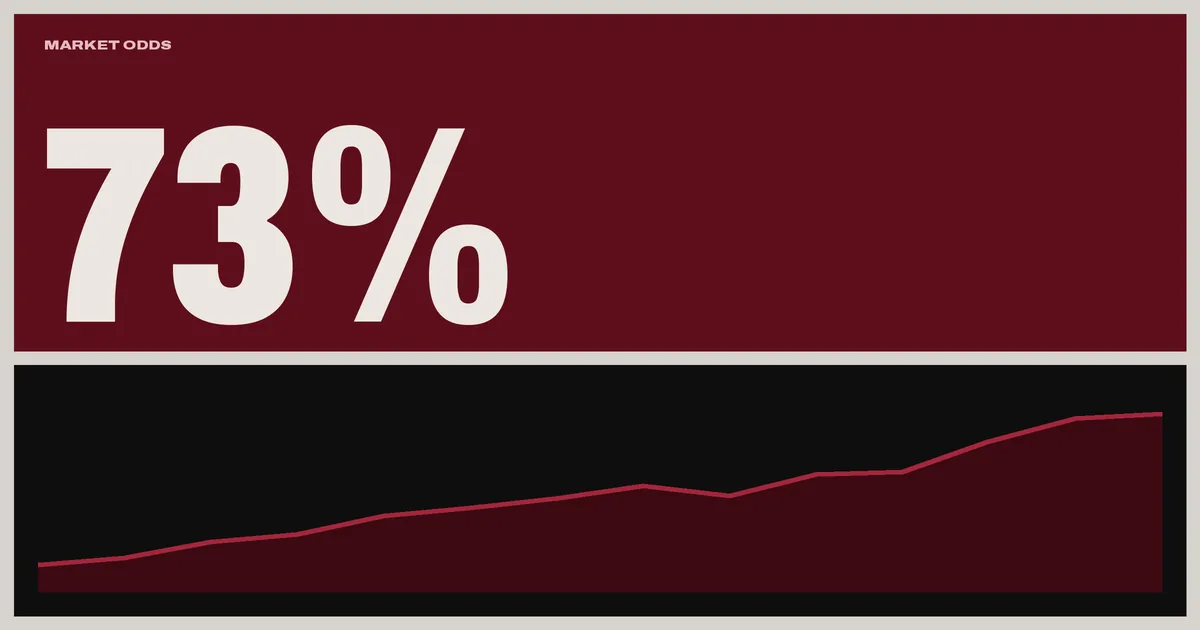
Our call: WTI will not trade at $75 or lower before November ends. Prices sit near $80 after the drop, the month has only a week of trading left, and the OPEC+ meeting on Nov. 29 is the main scheduled catalyst. Polymarket priced No on a $75 WTI low this month at 73% at 08:18 MSK on Nov. 24.
This article is for information only and is not investment advice. Calls are editorial forecasts, logged with market odds at the time of publication and kept on the record.