Rabigh refinery attack claim fails to lift oil as surplus outlook weighs
Yemen's Houthis claimed a Rabigh refinery attack on Sunday, but oil slipped on Monday, with WTI near $83 and Brent around $92, as forecasts of a supply surplus outweighed the risk of a wider Gulf conflict.
Oil traders shrugged off another strike claim in the Gulf. Yemen's Houthis said on Sunday they had carried out a Rabigh refinery attack in Saudi Arabia, yet on Monday West Texas Intermediate traded around $82.80 in Asian hours and Brent slipped to about $92, as expectations of ample supply outweighed the risk of a wider conflict.
What happened
The Iran-aligned group said it scored a direct hit, although the extent of any damage was unclear, CNBC reported, citing Reuters. The Saudi-led coalition said earlier that it had intercepted and destroyed a Houthi drone heading for the kingdom's western region, home to key refining and export sites. Rabigh sits on the Red Sea roughly 165 kilometers north of Jeddah and is home to Petro Rabigh, a refining and petrochemicals venture built by Saudi Aramco with Sumitomo Chemical of Japan, and has access to deep-water export facilities, The Economic Times noted. Saudi authorities did not immediately comment.
The weekend brought other incidents. Bahrain said two people were hurt on Saturday when Iran struck a civilian industrial site, and the United Kingdom Maritime Trade Operations reported that two tankers near Oman were hit by unidentified projectiles, followed by another incident on Sunday. President Donald Trump told Fox News he was inclined to resume strikes on Iran after the New Year if talks fail.
Why it matters
Supply is the stronger force for now. The International Energy Agency forecasts a global surplus of roughly 2 million barrels a day in the fourth quarter as Middle Eastern exports recover faster than demand, and Goldman Sachs has flagged the risk of a glut next year, FXStreet reported. Strategists at Brown Brothers Harriman estimate crude flows through the Strait of Hormuz are back to around 80% of pre-war levels, which they said should cap upside.
Brent is down roughly a fifth in November, much of it after Trump held off on new strikes following the midterm elections, The Economic Times said. That is a sharp reversal from the jumps triggered by earlier rhetoric, such as the Trump Iran remarks on Nov. 12. The Rabigh refinery attack claim shows how much risk the market now needs to see before it pays up again. Traders following energy odds can compare this with Polymarket energy markets.
What's next
The near-term chart still leans bearish, with WTI below its 100-day moving average, according to FXStreet. Confirmation of damage at Rabigh, more tanker strikes, or a clear timetable for renewed U.S. action could change that quickly. Until Saudi Arabia confirms damage, the Rabigh refinery attack remains a claim rather than a measurable loss of supply. CNBC's report on the claim is here.
The call
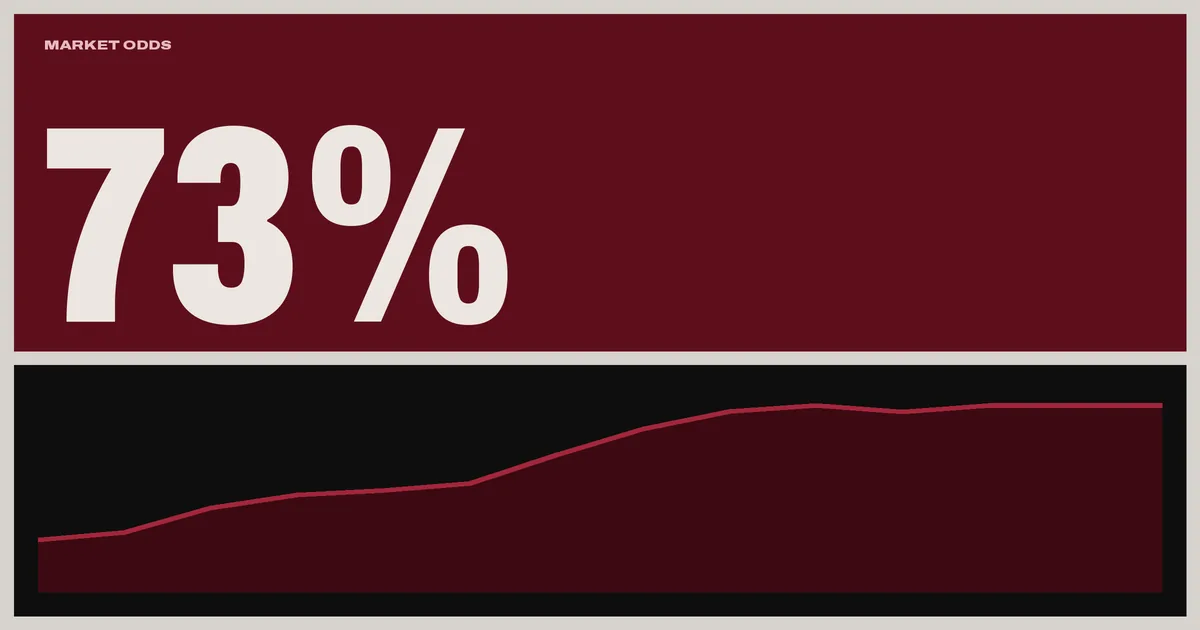
Our call: WTI will not trade at $90 or higher before November ends. Prices sit near $83 with a supply surplus forecast for the quarter, and the main upside threat, renewed U.S. strikes on Iran, was framed by Trump as a decision for after the New Year. Polymarket priced No on a $90 WTI high this month at 73% at 08:41 MSK on Nov. 23.
This article is for information only and is not investment advice. Calls are editorial forecasts, logged with market odds at the time of publication and kept on the record.