Riemann hypothesis claim from Anthropic mathematician puts Claude in spotlight
Anthropic mathematician Levent Alpöge says he and Claude found a proof of the Riemann hypothesis. The Riemann hypothesis claim comes with a Lean archive but awaits expert review.
One of the most famous open problems in mathematics may have a candidate solution, and an AI model helped write it. Levent Alpöge, a mathematician at Anthropic, released a Riemann hypothesis claim on Friday, saying that working with Claude he had found a proof of the 167-year-old conjecture and of its broader generalized form.
What happened
"I believe I have, working with Claude, discovered a proof of the Riemann Hypothesis," Alpöge wrote in a four-page note, according to Decrypt. He and Claude encoded the argument in Lean, software that checks each step of a mathematical proof, and the note links to a proof archive split into 14 downloadable parts.
The Riemann hypothesis dates to 1859 and is one of the Millennium Prize problems, which carry a $1 million award. It concerns the hidden structure behind how prime numbers are distributed, which is why a valid proof would matter far beyond pure mathematics.
Alpöge said he messaged Anthropic CEO Dario Amodei late on Sunday, Nov. 15, to ask how to announce the result, and then waited. "The precise timing is horrible," he wrote. The note came out one day after Anthropic's shares began trading on Nasdaq; he rejected a cynical reading of the timing but did not say whether the IPO caused the delay.
Why it matters
Early reaction from specialists has been cautious but engaged. TechCrunch reported that mathematicians are working through the result in an online Zulip chat, and several participants, including MIT mathematician Andrew Sutherland, said they had compiled the Lean files successfully. A proof that compiles is strong evidence that the formal statement holds, but experts still need to confirm that the formal statement matches the real conjecture and to understand the argument.
The claim also lands in a heated contest over AI and mathematics. Decrypt noted that Alpöge was involved in a credit dispute after OpenAI's Navier-Stokes claim in September, and that OpenAI later released 722 AI-generated manuscripts, of which only 162 included Lean-checked main results. A confirmed result would give Anthropic, fresh from its Nasdaq debut, a major research win. Some mathematicians fear what Decrypt called a "mathocalypse," in which AI solves prized problems before people can learn from working on them, and Toronto mathematician Daniel Litt was among those voicing concern. Whatever the verdict, this Riemann hypothesis claim will shape that debate.
What's next
Recognition will take time. The Clay Mathematics Institute's rules say it will not consider a solution until it is published in a qualifying outlet, at least two years have passed and it has general acceptance in the mathematics community. Expect weeks of review of the Lean archive and a human-readable write-up. TechCrunch's report on the Riemann hypothesis claim is here.
The call
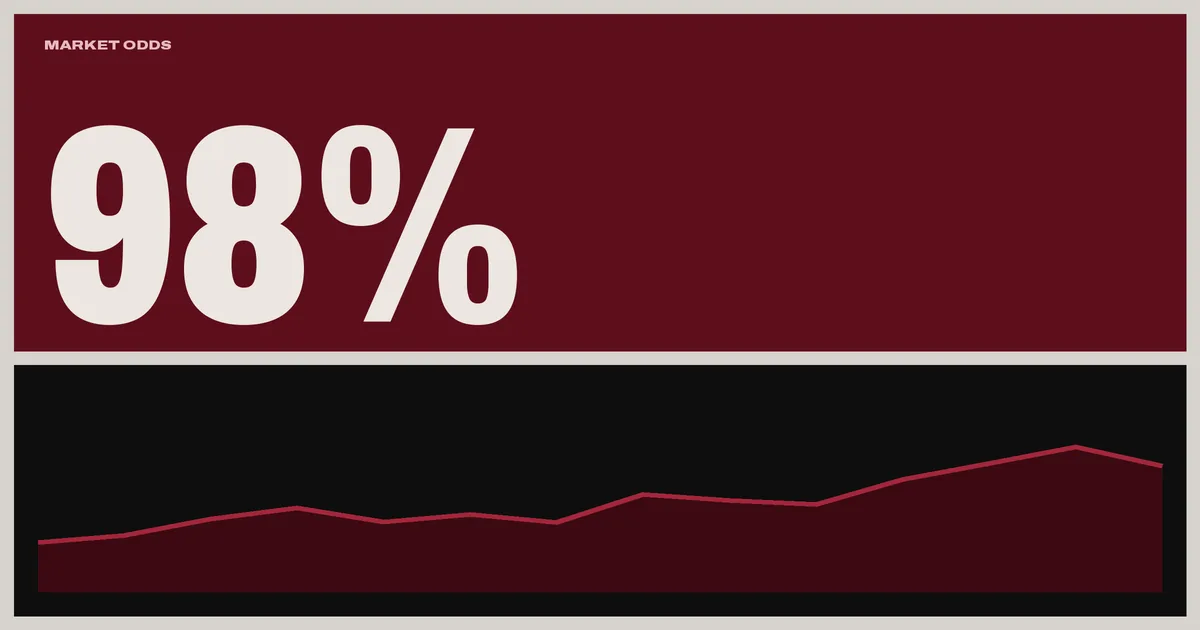
Our call: the Clay Mathematics Institute will not declare the Riemann hypothesis solved by Dec. 31, 2026. Its own rules require publication plus a two-year wait before it even considers a claim, whatever the Lean check shows. Polymarket priced No on a declaration this year at 98% at 08:47 MSK on Nov. 21.
This article is for information only and is not investment advice. Calls are editorial forecasts, logged with market odds at the time of publication and kept on the record.