Crypto Liquidations Near $770 Million Hit Longs
Monday's selloff produced roughly $770 million in crypto liquidations, almost nine-tenths of it leveraged longs, as bitcoin slipped below $82,000 ahead of U.S. CPI.
Bitcoin fell below $82,000 on Monday evening as a wave of crypto liquidations wiped out leveraged bulls across major venues, turning an earlier rebound toward $84,000 into a risk-off flush ahead of U.S. inflation data. The figures above are the overlapping facts confirmed across the cited sources.
What happened
The Block, citing CoinGlass, put crypto liquidations at $771 million over 24 hours through Monday evening, including $685.6 million in long positions. Bitcoin dropped 2.8% to $81,382 as of 9:20 p.m. ET Monday after trading near $84,200 earlier in the day, while ether fell 4.6% to $2,425. Solana declined 7.5% and XRP 6.4%; Zcash led top-10 losses, down 10.4% at $1,149. Within a tighter 12-hour window, The Block said liquidations were $631.8 million, with $600 million in longs.
BeInCrypto later put the same CoinGlass window near $774.14 million, with longs absorbing $688.56 million, or about 88.9% of the total, across 172,662 traders. Ether led coin-level crypto liquidations at $169.23 million (86.3% longs), followed by bitcoin at $160.48 million (90.2% longs) and solana at $60.41 million (94.2% longs). The largest single order flagged was a $9.65 million BTCUSDT long on Binance liquidated near $81,772.75; Binance handled 51.9% of the exchange share in that wrap. BeInCrypto also put total crypto market cap down 4.40% to $2.77 trillion over 24 hours, with bitcoin near $81,594 and ether near $2,429.16 in its snapshot.
U.S. spot bitcoin ETFs recorded $681.1 million in net outflows last week, their worst week since late June, according to SoSoValue figures cited by The Block, while spot ether ETFs saw $542 million in weekly net outflows. Dominick John of Zeus Research told The Block the pullback mixed macroeconomic headwinds, cooling institutional demand, and risk-off positioning ahead of inflation data, with elevated Treasury yields and a stronger dollar weighing on appetite. Public dashboards understate total damage when over-the-counter credit lines are cut, so visible crypto liquidations are a floor on stress, not a ceiling.
Why it matters
Concentrated long-side crypto liquidations show how quickly leverage rebuilds after a bounce and how little buffer exists when oil, yields, and Asian equities move together. South Korea's Kospi fell about 6% in Tuesday morning trade, The Block reported, and Bitmine chairman Tom Lee said the Korean equity slide was likely spilling into crypto through brokerage margin liquidations. That channel matters because Korean retail remains a large holder base for digital assets; when domestic stocks gap lower, crypto books can be cut for cash even if on-chain fundamentals are unchanged. Min Jung of Presto Research tied the Kospi break and circuit-breaker pressure to weakness in U.S. semiconductor and memory names spilling into Asia.
The flush also reframes the ETF outflow story. Last week's $681 million bitcoin fund redemption was already the largest since June; pairing that with crypto liquidations above $770 million leaves dealers and basis traders managing thinner books into a print that consensus expects to show hotter annual inflation. Justin d'Anethan of Arctic Digital told The Block the drop need not invalidate a broader bottoming narrative, but it does force a recalibration of support. For ether specifically, leading the liquidation bill after a multi-day ETF outflow streak compounds the sense that leveraged ETH books were the softest part of the complex overnight.
Geopolitical noise added another layer. BeInCrypto cited escalating Middle East conflict coverage, including Houthi attacks on Saudi airports, alongside Treasury yields near multi-decade highs that raise the relative appeal of bonds versus non-yielding assets. None of those headlines alone explains a $770 million wipeout, but together they describe why stop clusters below $82,000 filled quickly once the bounce failed.
What's next
Wednesday's September CPI report is the next scheduled catalyst. Economists cited by BeInCrypto expect annual inflation near 3.7%, up from 3.4% in August. A hotter print would keep hike odds alive into the Oct. 28 FOMC; a softer one would ease the dollar and yield pressure that accompanied Monday's drop.
Traders watching bitcoin's $82,000 zone will also watch whether Korean equities stabilize after the semiconductor-led rout that accompanied overnight crypto liquidations. Strategy's disclosure of another 250 BTC purchase and Bitmine's ether add, both noted by The Block, will be tested against whether corporate bids reappear on dips or wait for the CPI print.
The call
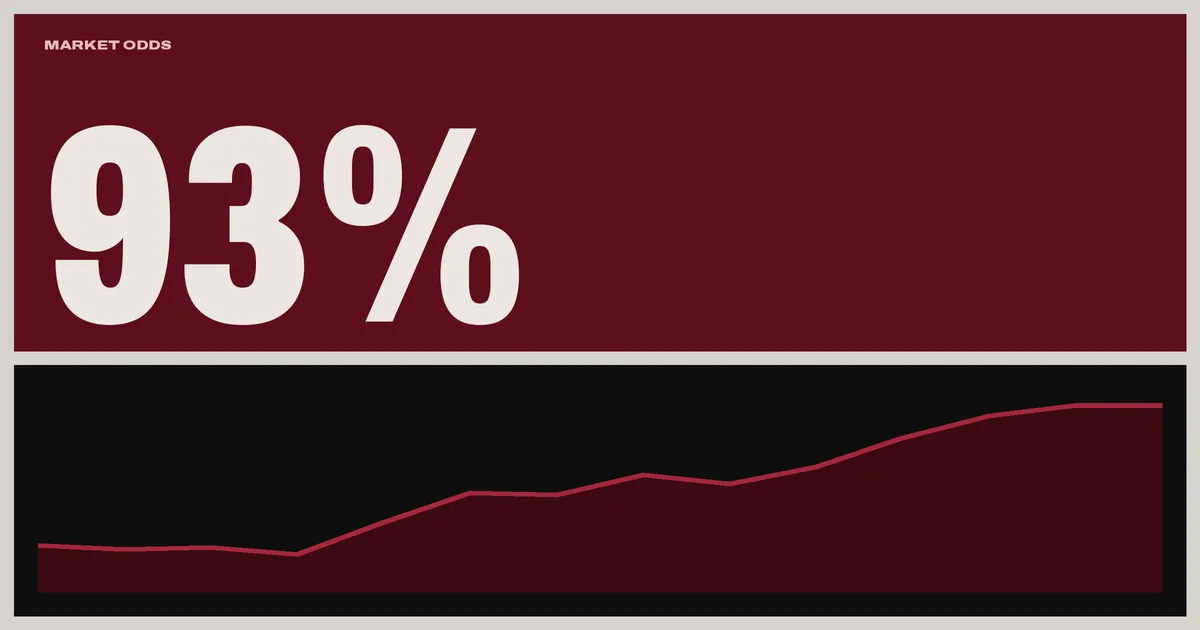
Polymarket prices a U.S. recession by the end of 2026 at only about 92.5% Yes as of 05:28 UTC on 2026-10-13 (volume $2,299,052). We call No: the United States will NOT enter a recession by December 31, 2026. Leverage flushes and a hot CPI week can bruise risk assets without meeting the recession threshold that market settles on. This is a dated record call, not investment advice.
For related coverage see our take on bitcoin ETF outflows and the ether ETF outflow streak. Those links stay on the same theme without restating unsettled secondary claims.
This article is for information only and is not investment advice. Calls are editorial forecasts, logged with market odds at the time of publication and kept on the record.