US budget deficit nears $2 trillion as interest soars
The U.S. ran a $1.992 trillion deficit in the fiscal year to September, the third-largest on record, as net interest costs passed $1 trillion and bond investors kept long-term yields near multi-decade highs.
The US budget deficit fiscal 2026 figure came in at $1.992 trillion, the Treasury Department reported on Friday, Oct. 16. Receipts totaled $5.403 trillion and outlays $7.396 trillion in the year to Sept. 30, according to the final Monthly Treasury Statement. The gap was about 12% wider than the $1.775 trillion deficit a year earlier.
What happened
It is the third-largest annual deficit in U.S. history, behind only the pandemic years of 2020 and 2021, and the 25th straight year of deficits, CNBC reported. Both receipts and outlays hit records, a Treasury official said.
The on-budget deficit was $1.816 trillion and the off-budget deficit, mainly Social Security and the Postal Service, was $176.6 billion, the statement shows. The debt pile crossed $40 trillion this year, more than twice its level a decade ago, CNBC said.
Social Security was the biggest line at nearly $1.7 trillion, followed by Medicare at almost $1.1 trillion. Net interest topped $1 trillion, up from $970 billion in fiscal 2025, and interest on the public debt exceeded $1.3 trillion. Individual income taxes brought in more than $2.8 trillion, while corporate taxes fell by about $70 billion to $381 billion after last year's tax cuts.
September alone showed a deficit of $26.9 billion, against a $198 billion surplus a year earlier, according to the Treasury statement. The statement notes that veterans' benefit payments shifted from Sept. 1 into August, which affects the monthly comparison.
Why it matters
Interest costs are now a budget item on par with Medicare, and they feed on themselves as old debt rolls into higher rates. Customs duties hit a gross record, but refunds after the Supreme Court's tariff ruling cut into net revenue, CNBC said.
The administration says growth is the answer. In August, Treasury Secretary Scott Bessent said on CNBC that the country can "grow our way out of" its debt. The US budget deficit fiscal 2026 total suggests that tariffs and growth have not yet closed the gap, with spending on entitlements and interest still climbing faster than revenue.
The debt bill weighs on the bond market, where the 10-year and 30-year yields hit their highest levels in roughly 24 years earlier this month, after a 10-year auction near 5.3%. Last week brought relief: the 10-year closed at 5.09% on Oct. 16, down 15 basis points on the week and its lowest close since Sept. 22, Treasury data show.
Hot inflation data did not derail that rally. CNBC said traders priced a more than 80% chance that the Fed holds rates at its Oct. 27-28 meeting, and the 30-year yield ended near 5.43%.
What's next
Fiscal 2027 began on Oct. 1, and the US budget deficit fiscal 2026 result sets a high base for the new year as interest costs keep climbing. The October Treasury statement, due in November, will give the first read on the new year.
On Polymarket's October yield ladder, the 5.29% rung had already resolved Yes earlier in the month, and a touch of 5.35% was priced at about 11% as of 08:30 MSK on Oct. 18. The Fed's decision and the next inflation reports are the near-term tests.
The call
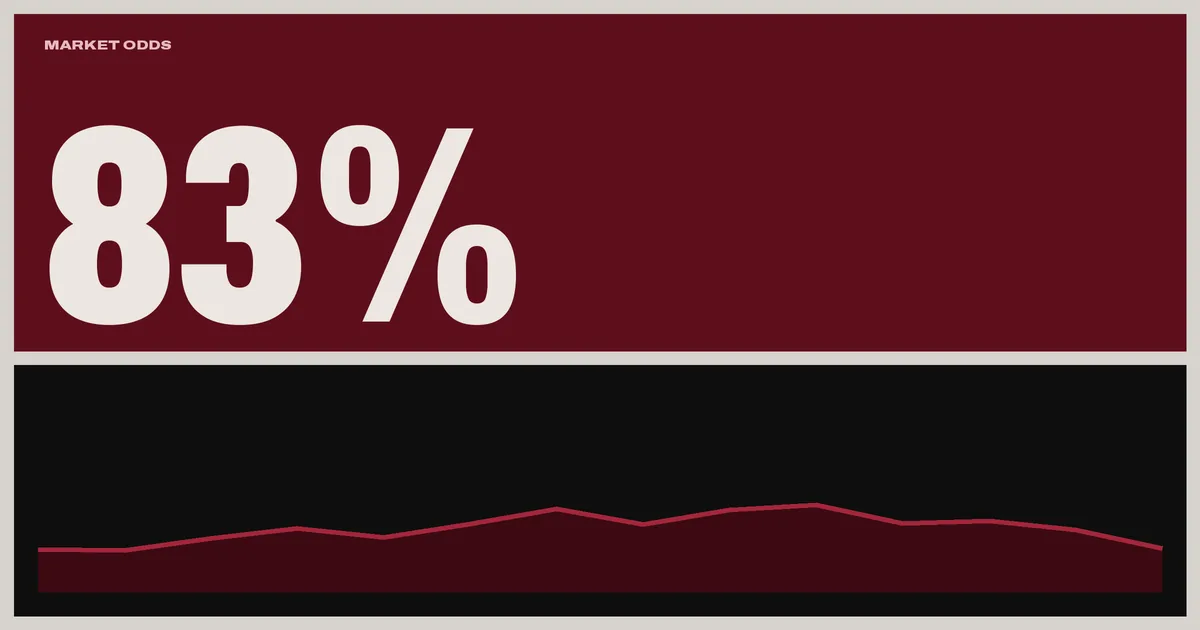
Polymarket prices "Will the 10-year Treasury yield hit 5.32% in October?" at about 83% No as of 08:30 MSK on Oct. 18; the market resolves on Treasury's daily par yield curve 10-year rate for any date in October. We call No: the 10-year Treasury yield will NOT reach 5.32% on any day in October 2026. It closed at 5.09% on Oct. 16 after falling in each of the week's four sessions, so it would need about 23 basis points in two weeks. The market is thin, with only a few hundred dollars of liquidity. This is a dated record call, not investment advice.
This article is for information only and is not investment advice. Calls are editorial forecasts, logged with market odds at the time of publication and kept on the record.