Oil Energy Ceasefire Claim Knocks Brent Below $104
An oil energy ceasefire claim from President Trump, paired with hopes of more Russian diesel exports, pushed Brent and WTI lower on Monday even as Houthi strikes and tanker incidents kept Middle East risk elevated.
Oil opened Monday softer after an oil energy ceasefire claim from President Donald Trump and fresh talk of Russian diesel returning to the market. CNBC said Brent crude for December fell 1.33% to $103.33 a barrel and U.S. West Texas Intermediate for November dropped 1.68% to $90.31.
What happened
Trump wrote on Truth Social that an "ENERGY CEASEFIRE" between Russia and Ukraine was effective immediately and that both parties had agreed, CoinDesk reported. Ukrainian President Volodymyr Zelenskyy later said Ukraine supports the ceasefire and is awaiting details, while earlier telling Axios the announcement was news to him. CNBC separately noted Trump's Friday claim that Moscow would supply more than four million tons of diesel under a U.S. deal, raising hopes of incremental supply.
The soft oil energy ceasefire tape does not erase weekend escalation. CNBC cited UOB on Houthi missile strikes on Riyadh's airport that killed 12 people and injured more than 300, and on Hurricane Isaias strengthening toward the U.S. Gulf Coast. Business Today reported UK Maritime Trade Operations notices of a drone strike on a vessel near Sohar, Oman, and another projectile incident in the Strait of Hormuz, and said Iran's foreign minister spoke with his Saudi counterpart about de-escalation. Price prints in that piece differed from CNBC's Monday soft open, underscoring how fast the session can swing.
Why it matters
Crude is still a crypto and equity macro input. CoinDesk noted bitcoin only began to rise after Zelenskyy's supportive post, gaining more than 1% toward $83,900 in that window. Our earlier Brent crude $102 and WTI crude $91.49 reports covered the Hormuz and Iran headline premia that an oil energy ceasefire narrative is now trying to fade. Hurricane curtailments and tanker attacks can put that premium straight back.
Headline conflict between a soft CNBC open and firmer prints elsewhere is itself information. Oil can swing several dollars on ceasefire language, tanker notes and hurricane updates within a single Monday. CNBC's $103.33 Brent and $90.31 WTI capture the oil energy ceasefire relief bid; Business Today's higher levels earlier or later in the session show how quickly that relief can fade when Houthi and Hormuz copy crosses the wire. Goldman Sachs, in the Business Today account, lifted its December Brent forecast to $90 from $85 while still assuming Mid-East supply eventually adjusts—an awkward mix of higher near-term risk premium and medium-term mean reversion.
Crypto's sensitivity showed up in CoinDesk's note that bitcoin barely moved on Trump's post and only firmed after Zelenskyy's supportive message. That sequencing matters for anyone treating Truth Social as an oil-and-BTC signal. Until verification of Russian diesel volumes and a durable pause on energy infrastructure strikes, the oil energy ceasefire claim remains a sentiment input, not a balance-sheet one. Hormuz transit statistics over the coming weeks will be the harder evidence.
Shipping risk is measurable in a way tweets are not. UKMTO notices of a drone near Sohar and a projectile in Hormuz, as carried by Business Today, are the kind of inputs freight desks use when they reprice war-risk insurance. If those incidents cluster, "normal traffic" by December becomes harder to argue on Polymarket or in physical barrels. Conversely, verified Russian diesel deliveries and a durable halt on energy-infrastructure strikes could rebuild inventories and validate Monday's softer open. The oil energy ceasefire claim is the narrative; barrels and transit counts are the evidence.
For now, Monday's softer prints under an oil energy ceasefire headline coexist with weekend bloodshed in Riyadh and drones near Oman—a combination that keeps hedges expensive.
What's next
CNBC said prices are likely to stay volatile while the U.S.–Iran conflict continues and Gulf output recovers from Isaias. Diplomacy between Riyadh and the Houthis, if it materializes, would matter as much as any Russia–Ukraine energy pause. Shipping through Hormuz remains the swing factor for December.
The call
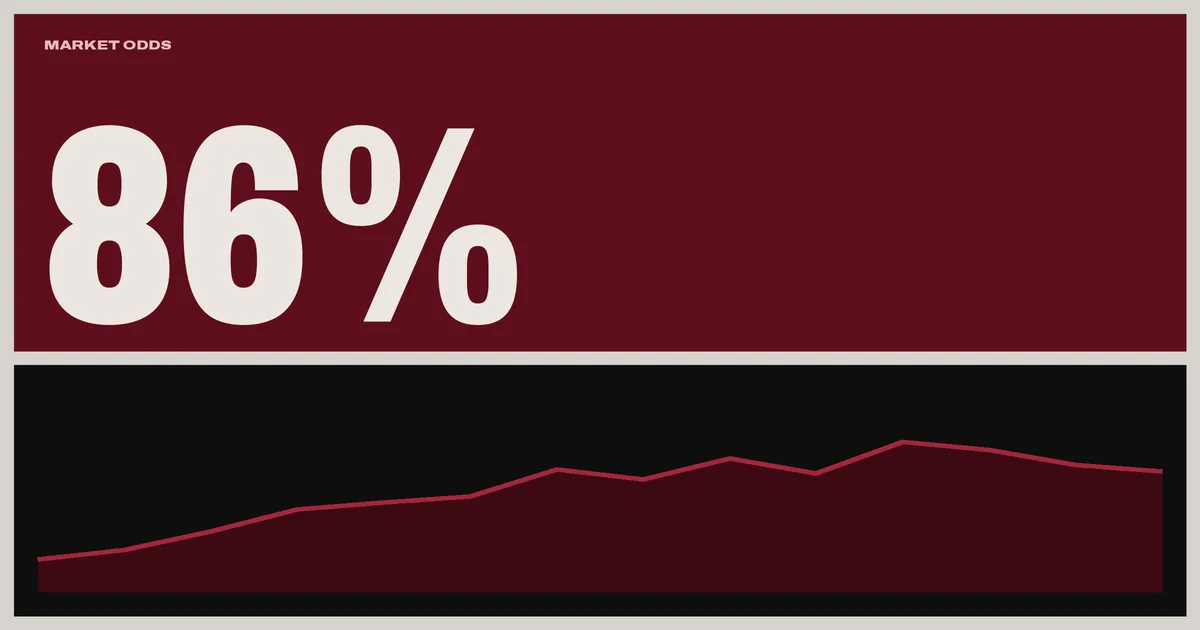
We do not expect Strait of Hormuz traffic to look "normal" by year-end on Polymarket's definition. On "Strait of Hormuz traffic returns to normal by December 31?," No traded at 85.5% when we checked at 05:12 UTC on 2026-10-12, with about $14,629,413 in volume. Our call is No. The market's rules turn on whether traffic normalizes by that date; weekend attacks and contested ceasefires are why the oil energy ceasefire headline has not cleared the risk premium. This is a dated record call, not investment or betting advice.
This article is for information only and is not investment advice. Calls are editorial forecasts, logged with market odds at the time of publication and kept on the record.