Waller Additional Rate Hikes Signal Keeps December Alive
Fed Governor Christopher Waller said he anticipates further rate increases if data arrive as expected, while stressing that hikes need not come at consecutive meetings.
Waller additional rate hikes talk set the tone for Thursday's rates debate. Speaking at the Istanbul Economic Forum on October 8, 2026, Federal Reserve Governor Christopher Waller said that if economic data continue to come in as expected, he anticipates further increases to bring inflation back to 2% in a timely way — without locking the Committee into a meeting-by-meeting path.
What happened
In the published speech, Waller reviewed why he supported September's 25 basis-point rise to a 3.75%–4% federal funds target after nine months on hold. He said labor-market stability and persistent inflation pressures — energy, AI-related high-tech prices and trade risks — had shifted the balance of risks toward inflation. August core PCE ran 0.25% month over month and 3% over 12 months, he noted, with 12-month core stuck roughly between 2.5% and 3.0% since spring 2024.
On the path ahead, Waller pointed to the September Summary of Economic Projections: 16 of 18 participants anticipated at least one more hike at the two remaining 2026 meetings, and four of those 16 expected two additional hikes. Futures as of the day before his speech, he said, priced an 85% chance of at least one hike by the end of the December meeting and nearly a 20% chance of two. By March 2027, markets saw nearly an 80% chance of at least two hikes.
His key line was explicit: "If the economic data continue to come in as expected, I anticipate additional hikes to support a timelier return of inflation to our 2 percent goal." He added that "the hikes do not need to come at consecutive meetings, but they should be in place in an acceptable period of time."
Invested Alpha said those remarks initially pushed the 10-year Treasury yield toward about 5.32% in the morning before Trump's Iran post and a solid 30-year auction pulled yields back, with the 10-year near 5.23% and the 30-year near 5.60% by the close.
Why it matters
Waller additional rate hikes comments matter because they translate SEP dots into spoken guidance without hard forward guidance. He described the SEP as a "signaling" device: communicate a likely terminal move while leaving pace and size data-dependent. That framing keeps December in play even if the October 27–28 meeting is live.
It also collides with a bond market that spent the week clearing coupon debt at higher yields than September. Invested Alpha noted the $22 billion 30-year sale priced at a 5.618% high yield with a 2.54 bid-to-cover. Higher term yields raise the cost of capital for risk assets — the same pressure that accompanied this week's crypto and equity selloffs, as we covered when Treasury yields hit their highest since 2002 and when Fed minutes leaned toward a year-end hike.
Waller's longer discussion of SEP signaling also matters for how markets should read Waller additional rate hikes language. He rejected both silence and rigid calendar guidance, arguing that telling markets a likely terminal adjustment — for example 75 basis points over about six months in his hypothetical — while leaving meeting-by-meeting pace flexible reduces volatility without pretending the path is locked. September's dots already showed a large majority expecting at least one more 2026 hike; his Istanbul speech simply refused to schedule it exclusively for October or December.
Invested Alpha's session narrative shows how quickly that message trades. Morning yield spikes on the hike talk faded once Trump's Iran post and the 30-year auction arrived, leaving the 10-year near 5.23%. That does not cancel the SEP; it shows geopolitics and supply still swing the belly of the curve hour to hour. For Called It's December call, the relevant scaffolding remains Waller's data-dependent hike bias, the 16-of-18 SEP majority and futures near an 85% chance of at least one increase by the end of the December meeting.
What's next
The next CPI print is due October 14 and the next FOMC decision October 27–28. Waller said he is not greatly concerned that tighter policy threatens a damaging slowdown while activity strengthens in the second half of 2026, but he is concerned that inflation expectations could drift higher after five and a half years above target. Markets will parse every subsequent speech for whether Waller additional rate hikes still describe a flexible path or harden into consecutive-meeting expectations. December remains the meeting futures have been pricing most heavily.
The call
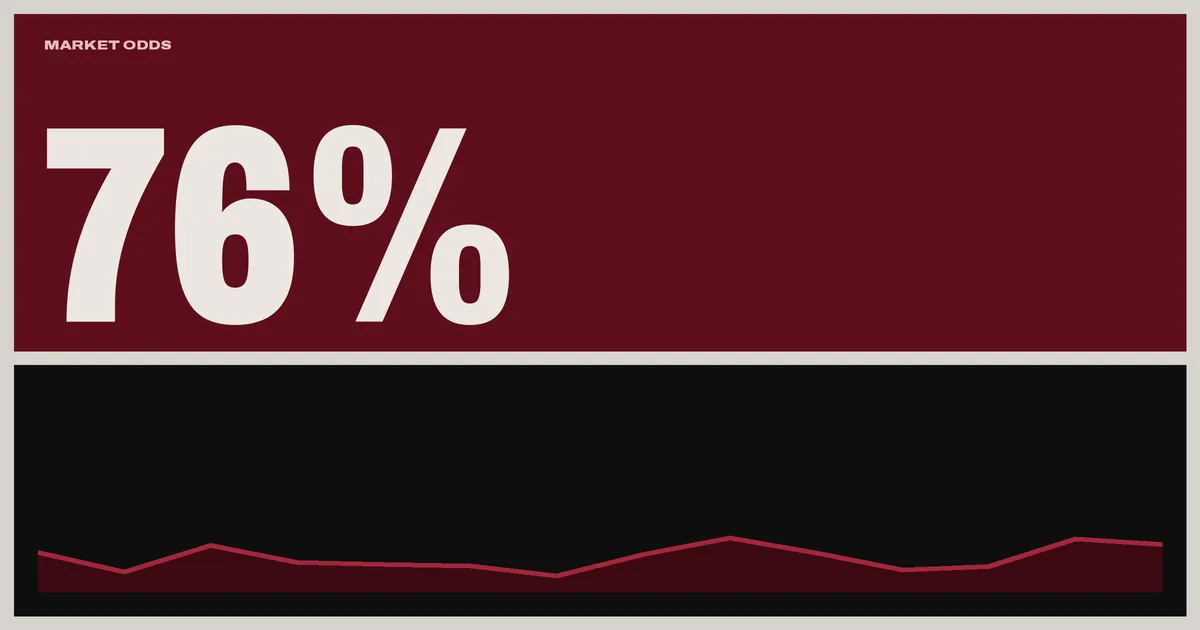
Polymarket asks whether the Fed will raise rates by 25 basis points at the December 2026 meeting. When Called It checked it at 05:16 UTC on 2026-10-09, "Yes" traded at 75.5%.
Our call: Yes. Waller's Istanbul remarks, the September SEP majority for at least one more 2026 hike, and futures near an 85% chance of at least one increase by the end of the December meeting all point the same way if inflation stays sticky. A sharp labor-market break or oil collapse could reopen a hold. We will check the result on December 10, 2026. This is a dated market call for the Called It record, not investment advice.
This article is for information only and is not investment advice. Calls are editorial forecasts, logged with market odds at the time of publication and kept on the record.