Bessent Promises a $1 Billion Iran Crypto Seizure This Week
Treasury Secretary Scott Bessent said the U.S. would "probably" seize about $1 billion of Iran-linked crypto within a week, without saying which assets or how, as Washington widens its sanctions campaign against Tehran.
A $1 billion Iran crypto seizure could be days away, if Treasury Secretary Scott Bessent's words hold. Speaking at the Newsmax Policy Summit on Thursday, October 8, 2026, he said the U.S. was "probably gonna seize a billion dollars of crypto this week" as part of its sanctions on Iran, Cointelegraph reported.
What happened
Bessent described the plan in sweeping terms. "We know where it is. We are isolating them. We did have a maximum pressure campaign, now we have an absolute isolation campaign and it's working," he said, according to Bitcoin Magazine. He also said, "What we have done has never been seen before."
He gave no detail on the mechanics. Neither outlet could say which cryptocurrencies would be targeted, whether the funds sit on specific exchanges or whether stablecoin issuers would be asked to act. Cointelegraph said the remarks came amid Iran's latest military conflict, which began in February. As of Sunday, the sources we reviewed did not report that the seizure had been carried out.
The comments build on earlier steps. In August, the Treasury's Office of Foreign Assets Control targeted crypto exchanges accused of moving funds to Iran's Islamic Revolutionary Guard Corps, and Bessent said then that the U.S. would "increase the economic pressure" on networks funding the government "in dollars, rials, or crypto," Cointelegraph reported. In an April interview, he said authorities had already seized $500 million of Iran-linked crypto. Bitcoin Magazine added that the U.S. began targeting crypto wallets linked to the Iranian regime in April, according to Bessent's comments at the time.
Why it matters
The Iran crypto seizure claim highlights how much depends on the type of asset. Bitcoin Magazine noted that bitcoin is censorship-resistant and very hard to freeze unless it sits on a centralised exchange, while tokens such as Tether's USDT can be frozen by their issuer. Bessent has previously said that seized Iranian crypto took the form of the stablecoin. Tether reported in September that it had frozen $550 million of USDT in 2026 in connection with U.S. sanctions on Iran, including $344 million in April alone, according to Cointelegraph.
The stablecoin channel has drawn attention in Congress as well. A September report by Democratic staff on the Senate Permanent Subcommittee on Investigations found that 84% of 846 crypto wallets sanctioned or targeted for seizure over links to Iran and its proxies used USDT exclusively or almost exclusively, Decrypt reported. That matters for any seizure plan: tokens held by an issuer that can lock wallets are far easier to immobilise than coins sitting in self-custody.
Iran's use of digital assets appears to be widening. Bitcoin Magazine cited a Financial Times report from last month that Iran was using bitcoin to settle cross-border transactions through domestic exchanges, and said the country launched a bitcoin-backed insurance service for shipping companies earlier this year. The approach mirrors Western pressure on other sanctioned networks, as our report on Treasury's A7 network sanctions showed, and Iran headlines have already moved crypto prices this month, as in the bitcoin rebound to $82,000.
What's next
The test is whether Treasury, the Justice Department or a stablecoin issuer announces an action matching Bessent's figure. Until then, the $1 billion number is a stated intention, not a completed Iran crypto seizure. Exchanges and issuers with exposure to Iranian flows face rising compliance pressure either way.
The call
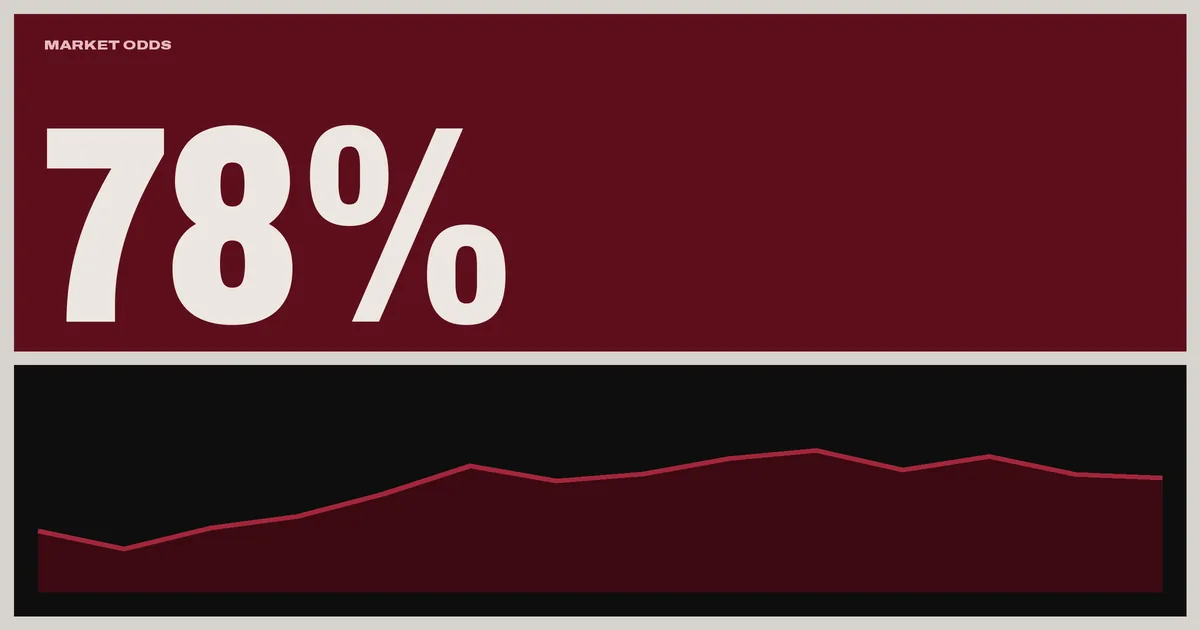
The sanctions push is unfolding against the risk of renewed U.S. strikes on Iran. On Polymarket's "US x Iran ceasefire continues through October 31?" market, the Yes outcome traded at 77.5% when we checked at 05:29 UTC on 2026-10-11, with about $2,110,657 in volume. The market resolves No if the U.S. carries out a qualifying air strike or surface-to-surface missile strike that directly hits Iran's land territory by 11:59 PM Iran Standard Time on October 31; intercepted munitions, cyber operations and threats that are not carried out do not count. Only strikes initiated by the United States qualify, and the rules also exclude naval gunfire, artillery, ground incursions and minor drone strikes, so the contract is narrower than a general question about whether fighting resumes.
Our call follows the market favourite: Yes, the ceasefire holds through October 31 with no qualifying U.S. strike on Iranian territory. We will score it on November 1. This is a dated market call for the Called It record, not investment or betting advice.
This article is for information only and is not investment advice. Calls are editorial forecasts, logged with market odds at the time of publication and kept on the record.